Commercial Waste Removal in Chessington
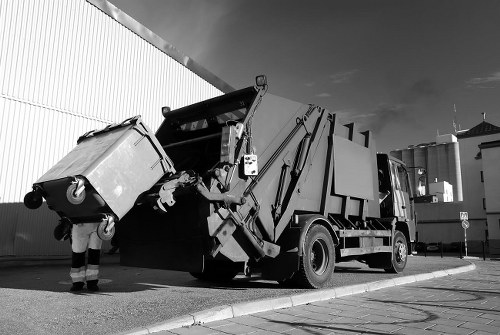
Commercial waste removal in Chessington helps businesses clear unwanted materials in a managed, lawful way, from routine mixed rubbish to bulkier items that need careful handling. Our service is built around practical collections for workplaces that want steady support rather than one-off disruption, with attention to separation, lifting, loading and sensible onward handling. If you are looking for a straightforward way to keep your premises tidy and usable, we can help arrange the right type of removal for the waste you produce.
We work with a broad range of commercial premises, including offices, shops, studios, workshops, hospitality sites and shared buildings. The aim is to keep the process clear: identify the waste, choose the right collection method and remove it without creating avoidable hold-ups. Commercial waste often contains a mix of packaging, fittings, broken fixtures and general rubbish, so a good service has to be adaptable. That means matching the collection to the load, rather than forcing everything into a single approach.
To make a quotation easier to prepare, it helps to note the type of waste, how much there is and whether it is already gathered in one place or still spread across the site. Access details can also matter, particularly if items need carrying from an upper floor, a rear yard or a shared entrance. If you are ready to discuss a collection, start with the waste you need removed and we can take it from there.
General Commercial Clearance and Site Waste
General commercial clearance is often the most practical option when a business has accumulated mixed waste that no longer serves a purpose. This can include packaging, obsolete stock, damaged display material, broken small fixtures, non-confidential paperwork, and other items that clutter working areas. The value of a clear service is not only in what is taken away, but in how the work is organised so the site can continue to function. Clear access routes, sensible sorting and careful loading all help keep disruption under control.
Where waste streams are mixed, we focus on the item types and the handling they need. Some materials may be suitable for straightforward recycling routes, while others need separate disposal. Businesses often prefer this to be handled without fuss, especially when the waste has built up over time or the area being cleared is shared. If you are comparing options, our pricing and quotes page is a useful place to review the kind of information that helps shape a more accurate estimate.
What is usually included
Office Waste, Furniture and Working Space Clearances

Office waste removal is often about more than simple rubbish collection. Desks, chairs, shelving, filing units, monitors, packaging and general office clutter can all need to be removed in a way that respects the layout of the building and the people still using it. We can handle a planned clearance or a smaller removal of surplus items, keeping attention on safe lifting and practical access. The goal is to leave working areas ready for the next stage, whether that means reorganisation, refit or day-to-day use.
Furniture removals are a useful part of this service where offices, reception areas and storage spaces need to be refreshed. Large items can be awkward in narrow corridors or shared buildings, so the method of removal matters as much as the item list itself. Where needed, we separate reusable or recyclable materials from other waste. If your collection includes items such as old seating or office desks, our furniture disposal page gives a relevant service option to consider alongside the main clearance.
Commercial waste work in office settings often benefits from being grouped into sensible categories before collection. That can mean separating general rubbish from archive material, electronics, office furniture and packaging, then deciding which part of the job needs the most attention. A clear list is not just helpful for pricing; it also makes the removal more efficient on the day. Use the brief checklist below when planning an enquiry:
- the main items or waste types that need removing
- rough volume, number of rooms or number of items
- any access restrictions, stairs or loading issues
- whether the waste is loose, bagged or stacked
Business Waste Removal for Shops, Workshops and Offices
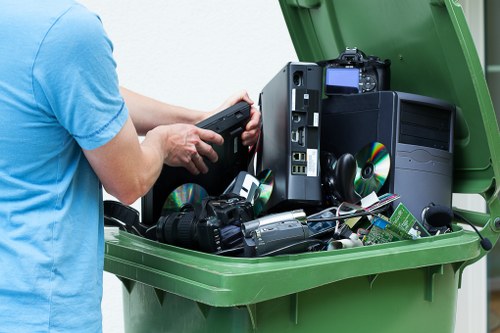
Business waste removal covers the everyday loads that build up in commercial settings, from packaging and mixed rubbish to broken equipment, display waste and surplus stock. Some businesses need occasional clearances after a refit or delivery cycle, while others simply want a reliable way to deal with accumulated waste before it begins to interfere with trade. Our approach is focused on keeping the process direct and manageable, with suitable handling for the kind of material your site generates.
For many businesses, the main challenge is not just the amount of waste, but the variety. A workshop may have timber offcuts, metal parts and mixed rubbish; a shop may have packaging, shelving and old promotional material; an office may have desks, paper waste and disposal items from a move. These are all different in handling, and they should not be treated as though they were identical. Where the work involves wider commercial waste support, the business waste removal page may be a helpful companion to this service overview.
Some jobs are best scheduled around opening hours, especially where access corridors, loading bays or customer routes are shared. Other collections work better as a one-time clearance after stock changes or refurbishment. The key is to match the removal to the business pattern rather than interrupting it unnecessarily. If the waste is already grouped, that can speed things up; if it is not, we can still talk through the best way to approach the load. Send the essentials first and build the quotation from there.
Specialist Items and Separate Waste Streams
Some commercial waste needs more specific handling than general rubbish. That includes appliances, confidential material, bulky furniture, and items that may require separation before disposal. A commercial waste removal service is most useful when it recognises these differences instead of forcing everything into a single collection type. The right route depends on what is being removed, how it is stored and whether any items need particular care during lifting or movement through the building.
Specialist streams may also benefit from advance sorting at the point of collection. For example, confidential paperwork should not be mixed with ordinary office rubbish, and certain electrical items may need to be kept apart from standard furniture or packaging. Where a site has a mix of these materials, clear planning can prevent confusion and avoid unnecessary handling. If confidential paperwork is part of the load, our confidential shredding page describes a more focused option for sensitive document disposal.
Examples of separate handling needs
Bulky Items, Appliances and Larger Commercial Loads

Bulky items can turn a simple clearance into a more physical task, particularly when they are awkward to move or must be carried through narrow access routes. Examples can include fridges, cabinets, counters, sofas from staff areas, partitioning materials and other large pieces that are no longer required. Removal of these items needs a considered approach because weight, shape and location all affect the time and handling involved. Our service is designed to treat bulky waste as part of the wider commercial load, not as an afterthought.
Electrical and appliance items also need a sensible route. They may be heavy, may include mixed materials and often cannot simply be treated like everyday rubbish. The same applies to certain large fittings that come out during a fit-out or relocation. If your job includes domestic-style appliances from a staff area or premises with mixed use, our fridge and appliance removal page is relevant to that part of the collection.
The practical question is often how the items leave the site. We look at whether they are already disconnected, whether lifting equipment or multiple passes are needed, and whether the load can be removed in one visit or must be split. That kind of judgement matters because it helps avoid unnecessary handling and keeps the quotation realistic. A clearer plan also reduces the chance of delays on the day of collection.
About Chessington
Chessington is a district in the Royal Borough of Kingston upon Thames, positioned on the south-west edge of Greater London near the Surrey boundary. It is best known for the large country park and zoo complex that shares its name, but the area itself has a longer history shaped by older settlement, later suburban growth and transport links. The place name appears in early records, and the modern district reflects layers of development rather than a single period of expansion. Its landscape includes residential streets, local shopping parades, schools and green spaces, with edges that feel transitional between outer London and the neighbouring county. That position has helped give Chessington a character that is at once suburban and semi-rural in places. The built environment includes a mix of post-war housing, more recent infill and surviving older structures, while nearby open land and parks provide relief from the denser residential stretches. Chessington South and Chessington North rail stations connect the district to wider London routes, and the A243 runs through the area as an important local corridor. The theme park and zoo are the most widely recognised landmarks, yet the district also has everyday civic life centred on schools, worship, leisure and small-scale shopping. Local green spaces and the surrounding commons contribute to a sense of openness, and the area’s position close to the county border means it sits within a broader landscape of suburbs, woodland edges and travel routes rather than forming an isolated centre.
Clearance Planning, Access and Quotation Details
Good planning usually makes a commercial collection smoother, especially where access is tight or the waste is spread across several rooms. It is useful to know whether items are on one floor or several, whether there is a lift, and whether vehicles can park close to the loading point. Contact us if you would like to discuss the practical side of the job, including the best way to describe the waste before the visit. A concise summary often gives enough detail to prepare the next step.
For a quotation, the most useful information is usually the type of waste, the approximate volume and anything that could affect safe removal. That might include restricted access, heavy lifting, fragile surroundings or items that need to be kept apart. Photographs can help with larger or mixed loads, while a basic list is often enough for smaller ones. If you want to see the main service overview again, waste removal provides a broader entry point into the collection options available through this site.
When businesses are comparing arrangements, they often want to know whether the job is best handled as a single clearance or as a repeated removal pattern. Both can be sensible depending on the volume and the type of waste. Clear information leads to a clearer quotation, and that is usually the quickest way to move from planning to collection. If you already know the scale of the work, you can request a quote now and arrange the details afterwards.
Furniture, Fit-Out Waste and Internal Refits
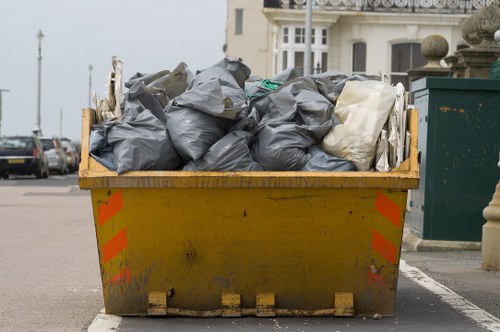
Refits and internal changes often produce a different kind of commercial waste from day-to-day refuse. Old desks, shelving, reception fittings, counters, storage units and other furnishings may need removing alongside packaging and smaller debris. The work can involve both lifting and sorting, particularly where reusable materials must be separated from waste that is destined for disposal. A structured clearance helps keep the site functional while the changeover is taking place, which is why this type of removal is often planned in stages.
Furniture disposal is rarely only about size. Some items are awkward because of their shape, some because they are located in confined spaces, and some because they must be moved without disturbing surrounding fixtures or finished surfaces. Where a mixed load includes seating, tables or office furniture, our furniture clearance page is another useful option. It sits well alongside commercial waste removal where the job includes both general and bulky pieces.
In practice, a refit waste collection can be easier when the items are grouped by room or area before the team arrives. That reduces time spent moving between zones and makes it simpler to separate what is staying from what is going. It also helps if anything fragile, sharp or unusually heavy is flagged in advance. With that information in place, the clearance can be shaped around the site rather than forcing the site to adapt to the clearance.
Recycling, Disposal Routes and Responsible Handling
Responsible commercial waste removal is about choosing an appropriate route for each type of material rather than assuming everything should be handled the same way. Cardboard, metal, wood, mixed rubbish, electrical items and reusable furnishings may all move through different disposal or recovery paths. Where possible, sorting helps improve the outcome because it keeps recyclable material apart from general refuse. That approach is useful for businesses that want a cleaner working environment and a more orderly disposal process.
Different waste types can also carry different handling concerns. Hazardous materials, for example, should not be mixed with ordinary commercial rubbish, and they may need a separate route entirely. If your project includes more sensitive or controlled material, our hazardous waste disposal page is the relevant place to review that kind of service. We always treat specialist waste as something that needs proper identification before collection rather than guesswork on the day.
For many customers, the main benefit of a clear disposal process is certainty. It is easier to plan the next step when you know the waste is being handled in a way that suits the type of material and the layout of the premises. That is especially true after clear-outs, moves or refits, when mixed loads can become complicated quickly. A measured approach keeps the work manageable and reduces avoidable handling.
Booking, Access and Final Collection Arrangements
Commercial waste removal is usually simplest when the collection details are settled before the day itself. That includes the type of waste, approximate quantity, access arrangements and any particular items that need separate attention. It also helps to know whether the load is already in one place or spread across the building. The more precise the basic information, the easier it is to prepare a practical collection plan without extra back-and-forth.
If you are ready to move ahead, you can use the booking route that suits you best and then confirm the details of the waste you want removed. Book online when you have a straightforward collection to arrange, or request a quotation if you prefer to talk through the load first. The important point is to match the service to the waste rather than squeezing the waste into an unsuitable process.
We can help with one-off clearances, staged removals and ongoing business waste needs where the site generates a recurring mix of rubbish and bulky items. If you have a list ready, keep it simple and accurate; if you do not, a short description is still enough to begin. Tell us what needs removing, and we can work from there. For the quickest next step, request a quotation today.